splanchnic blood flow
The main areas of interest include the innervation of blood vessels and viscera autonomic ganglia efferent and afferent autonomic pathways and autonomic nuclei and pathways in the central nervous system. Redistribution of blood flow away from the cutaneous and splanchnic circulation.

The Splanchnic Organs Special Circulations The Cardiovascular System Medical Physiology 3rd Edition
For example as a result of sympathetic vasoconstriction renal and splanchnic blood flow can both fall to 25 of resting values during heavy exercise in humans but oxygen consumption in these tissues is preserved by marked increases in extraction 86 395 396.

. Resting splanchnic blood flow SBF is typically 30 ml min 1 100 g 1 of tissue which equates to 2530 of the cardiac output. Aside from stimulating the heart to increase the rate and force of its contractions it also causes dilation of the renal and splanchnic arterioles increasing blood flow to the kidneys. The blood flow to the glomerulus is regulated by several mechanisms. Blood flow and redistribution of blood to ischemic areas may occur with β-blockers.
The stomach is an organ of the digestive system specialized in the accumulation and digestion of foodIts anatomy is quite complex. They increase cardiac. Reduction of sympathetic stimulation results in vasodilation and increased blood flow through the kidneys during resting. Of blood in the splanchnic capacitance system.
The presence of numerous arteriovenous anastomoses in glaborous skin can lead to large changes in blood flow to these regions for example in heat arteriovenous anastomoses open and blood flows directly from artery to vein bypassing high-resistance arterioles and capillary loops. This may decrease to splanchnic circulation must therefore be highly adaptive. The parasympathetic nervous system predominates in quiet rest and digest conditions while the sympathetic nervous system. 95 The coincidence of markedly decreased mesenteric blood flow and bacterial translocation has also been.
The term splanchnic circulation describes the blood flow to the abdominal gastrointestinal organs including the stomach liver spleen pancreas small intestine and large intestine. Large veins that are considered part of the portal venous system are the. Splanchnic circulation the circulation of the gastrointestinal tract originating at the celiac trunk the superior mesenteric artery and the inferior mesenteric artery. This is an international journal with broad coverage of all aspects of the autonomic nervous system in man and animals.
When a clot slows or stops the flow of blood it can build up in the vessel and make it swell. Blood flow through the superior mesenteric artery was particularly reduced. Results from a functional obstruction to blood flow from any point in the portal systems origin in the splanchnic bed through the hepatic veins exit into the systemic circulation or from an increase in blood flow in the system. Autoregulation is a manifestation of local blood flow regulationIt is defined as the intrinsic ability of an organ to maintain a constant blood flow despite changes in perfusion pressureFor example if perfusion pressure is decreased to an organ eg by partially occluding the arterial supply to the organ blood flow initially falls then returns toward normal levels over the next few.
If it happens in your lower leg or calf its often. Transfusion may counteract the splanchnic vasoconstrictive response caused by hypovolemia inducing an increase in splanchnic blood flow and pressure that may impair the formation of clots. Dobutamine and ephedrine are synthetic catecholamines indicated for treatment of heart failure. This way renal shutdown is prevented.
It consists of four parts two curvatures and receives its blood supply mainly from the celiac trunkInnervation is provided via the vagus nerves and the celiac plexus. Blood circulation The circulation of blood refers to its continual flow from the heart through branching arteries to reach and traverse the microscopic vessels in all parts of the body reconverging in the veins and returning to the heart to flow thence through the lungs and back to the heart to start the circuit again. The superior mesenteric vein and the splenic vein come together to form the actual hepatic portal veinThe inferior mesenteric vein connects in the majority of people on the splenic vein but in some. 1Control of peripheral blood flow to glaborous skin.
The parasympathetic nervous system PNS is one of the two functionally distinct and continuously active divisions of the autonomic nervous system ANS. The enhanced blood flow is activated by the VIPergic innervation of the large vessels supplying the epithelium and the transudation possibly aided by the CGRP calcitonin gene regulating peptide enhanced permeability of the capillary tufts. Substantial progress has been made in understanding the pathophysiology of portal hypertension. Prophylactic antibiotic therapy should be initiated alongside somatostatin analogues eg.
The Editors will consider papers. Stimulation of systemic catecholamine release from adrenal glands which produces an increased systemic effect in addition to the peripheral sympathetic nervous system effecs. Persistent hypotension is typically defined as systolic blood pressure lower than 90 mm Hg or MAP lower than 65 mm Hg with altered tissue perfusion. Mesenteric blood volume increases as ventricular size ventricular pressures and intrapericardial pressure decrease.
Blood flow into the flaccid penis is limited by a high sympathetic tone that constricts the blood vessels and lacunae mediated by alpha-adrenergic transmission norepinephrine noradrenaline. Other constrictive neurotransmitters such as endothelin-1 thromboxane A and prostaglandin PGF2 are also expected to play a part. The kidneys are innervated by the sympathetic neurons of the autonomic nervous system via the celiac plexus and splanchnic nerves. Thanks to the stomach every human is technically capable of corroding.
Splanchnic organs - including the stomach small intestine large intestine pancreas spleen liver and may also include the kidney. Splanchnic mesoderm is the embryonic origin of the second heart field gastrointestinal tract connective tissue smooth muscle blood vessels and contribute to organ development heart pancreas spleen liver. Terlipressin or octreotide acting to reduce splanchnic blood flow and hence reduce bleeding A Sengstaken-Blakemore tube can be used in severe or uncontrollable cases inserted to the level of the varices and inflated to compress the bleeding to act as. 95 Vasoconstriction of the splanchnic vessels has been associated with the release of so-called myocardial depressant factors 96 and with bacterial translocation.
Metabolism promotes excellence in research by publishing high-quality original research papers fast-tracking cutting-edge papers research brief reports mini-reviews and other special articles related to all aspects of human metabolism. The mean blood pressure required for adequate splanchnic and renal perfusion MAP 60 or 65 mm Hg is based on clinical indices of organ function. NPY neuropeptide Y a known vasoconstrictor may be involved in constricting the venous drainage. Stenosis - Abnormal narrowing of a blood vessel or orifice.
This uninterrupted movement of the blood is necessary to. It is in opposition to the other the sympathetic nervous system SNS. Blood flow to the kidneys at rest is 12 lmin and the liver receives 1.

Effect Of Stimulation Of Catecholamine Receptors Within The Splanchnic Download Scientific Diagram

Terlipressin Constricts The Splanchnic Blood Vessels Thereby Reducing Download Scientific Diagram

Anatomy Of The Splanchnic Portal And Hepatic Venous Circulation With Download Scientific Diagram

How Does Splanchnic Circulation Work Quora
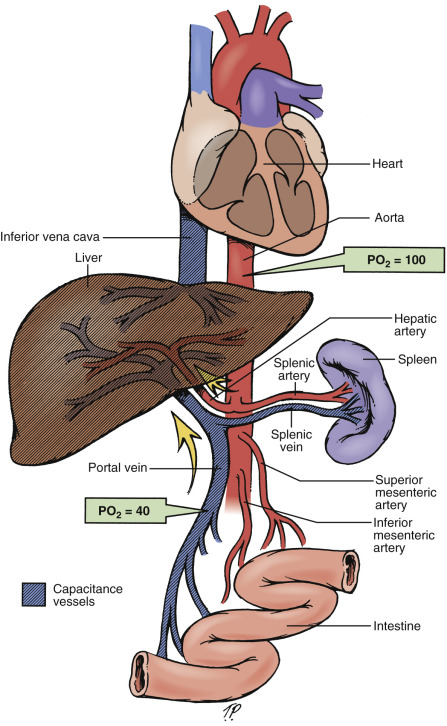
Organ System Response To Cardiac Function Splanchnic Thoracic Key

Posting Komentar untuk "splanchnic blood flow"